
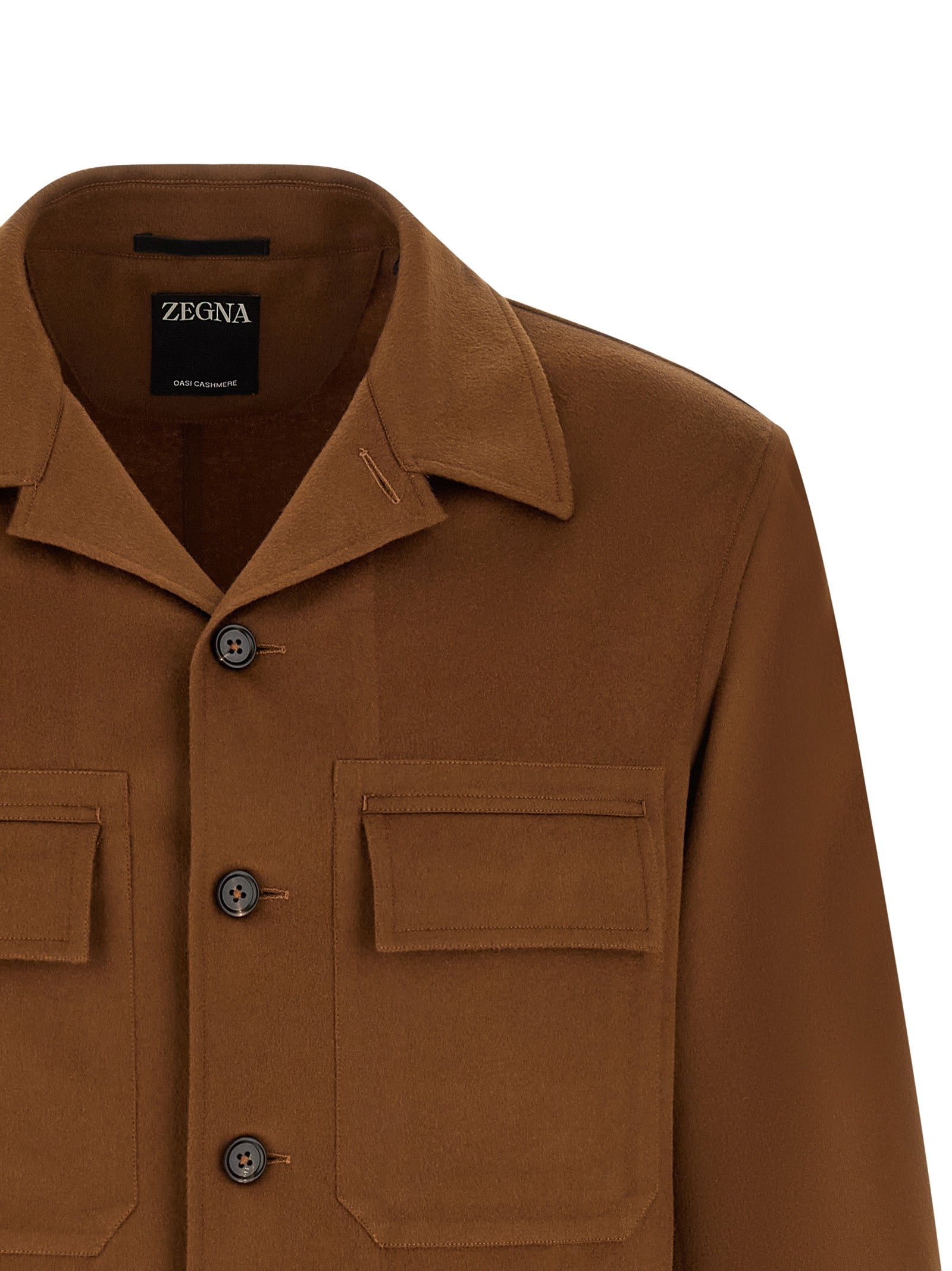
From Wool Mill to Wardrobe: The Zegna Story, and What to Check Before You Buy
Most fashion houses design clothes and buy fabric from someone else. Zegna has spent over a century doing the opposite: controlling the entire process, from the raw wool to the finished piece, without handing any part of it to an outside supplier.
That's not a marketing claim. It's the literal structure of the business, and it's the reason the name carries the weight it does in menswear specifically.
A Business Built on Owning Every Step
Ermenegildo Zegna founded a wool mill in Trivero, in the Italian Alps, in 1910, at just eighteen years old. The region was already known for textile production, and the mountain water there — low in minerals — happened to be ideal for finishing exceptionally soft, fine wool.
What set Zegna apart wasn't just the quality of the fabric. It was the decision to control every stage of it: sourcing raw wool directly, running his own mills, and eventually producing finished garments under the same roof as the fabric itself. Vertical integration, decades before it became a business school term.
In the 1930s, Zegna also began planting hundreds of thousands of trees in the mountains around Trivero — a project that would eventually become Oasi Zegna, a protected nature reserve that still surrounds the original mill today. It's an unusual thread running through the brand's history: a textile company that invested in the land around it a century before "sustainability" became a marketing word every luxury brand uses.
What You Will Find at Aulæ
Our Zegna selection reflects the brand's range — sourced through our verified European supplier network and checked against our standard authentication process before going online. Availability rotates as stock changes, so the current selection is always the accurate one on the collection page itself.
Browse the current Zegna selection at Aulæ →
aulae.shop/collections/ermenegildo-zegna
What to Check Before You Buy
Fabric weight and finish. Genuine Zegna pieces use fabric that holds its shape and has a specific, substantial hand-feel — a direct result of the brand's control over its own mills. Thin, stiff, or inconsistent fabric is one of the clearest signs something is off.
Stitching precision. Look for even, tight stitching with no variation in tension across seams — the kind of consistency that comes from genuinely careful construction, not a rushed replica.
Labels and embossing. Woven labels should be cleanly finished with precise, evenly spaced lettering. Any embossed branding on hardware or leather should be sharp and centred, not shallow or blurred.
Care tags and internal markings. These should be consistent, properly formatted, and appropriate to the piece's actual country of manufacture — inconsistencies here are a small but reliable warning sign.
Overall proportion and cut. Zegna's reputation rests on precise, considered construction. A piece that feels slightly off in proportion or finish relative to what you'd expect from the brand is worth a second look.
The Price Reality
Zegna is sold through established multi-brand retailers, and genuine discounted stock moves through normal wholesale and end-of-season channels.
A realistic outlet discount sits between 30% and 50% off current retail. At Aulæ, every price reflects real sourcing through our European network — if you want to know more about a specific piece, ask us.
See what is currently available →
aulae.shop/collections/ermenegildo-zegna


Leave a comment
This site is protected by hCaptcha and the hCaptcha Privacy Policy and Terms of Service apply.